Tag: Cyber Threats

  • VMware Aria Operations Bug Exploited, Cloud Resources at Risk

    VMware Aria Operations Bug Exploited, Cloud Resources at Risk

    Another VMware vulnerability has been exploited in the wild, according to the Cybersecurity and Infrastructure Security Agency (CISA). 

    CVE-2026-22719 is a high severity (CVSS 8.1) command injection vulnerability present in VMware Aria Operations versions prior to 8.18.6. According to VMware owner Broadcom in an advisory, “A malicious unauthenticated actor may exploit this issue to execute arbitrary commands which may lead to remote code execution in VMware Aria Operations while support-assisted product migration is in progress.”

    It was first disclosed and updated to 8.18.6. on Feb. 24 alongside two other flaws, Aria Operations cross-site scripting bug CVE-2026-22720 (CVSS 8.0) and privilege escalation vulnerability CVE-2026-22721 (CVSS 6.2). 

    On March 3, CISA added CVE-2026-22719 to its Known Exploited Vulnerabilities (KEV) catalog alongside a recent Qualcomm bug. The same day, Broadcom updated its advisory with a line, “UPDATE: Broadcom is aware of reports of potential exploitation of CVE-2026-22719 in the wild, but we cannot independently confirm their validity.” 

    Related:AI Agent Overload: How to Solve the Workload Identity Crisis

    Dark Reading contacted Broadcom for additional comment; the company reiterated the above.

    Though customers are urged to patch, a workaround also exists in the form of a script vulnerable customers can run in their environments. Vulnerable customers include those running Aria Operations version 8 up to and including 8.18.5, as well as Aria Operations version 9 up to and including 9.0.1.

    Unique Risks Surrounding Cloud Management Platforms

    Aria Operations is a unified IT management platform used for monitoring and managing a wide range of cloud environments. Although such tools are useful, they also act as a central point for a threat actor to access a swath of infrastructure due to the access these management products require.

    Collin Hogue-Spears, senior director of solution management at Black Duck, tells Dark Reading that a compromise against Aria Operations through a flaw like CVE-2026-22719, a basic command injection flaw that can grant unauthenticated root access to an instance, also compromises the entire virtual infrastructure at once, including credentials, network topology, monitoring, and more.

    “An attacker who takes Aria does not steal one server,” Hogue-Spears says. “They inherit the credentials and network topology for every system Aria manages. They see what your SOC sees. They control what your SOC trusts. The first thing a capable attacker does after compromising a monitoring platform: make that platform report that nothing happened. Your team watches clean dashboards while the attacker harvests vCenter service accounts, maps every ESXi host, and stages ransomware deployment across your entire virtual estate. This is not speculative. Scattered Spider, Qilin, and Lazarus Group all have documented campaigns targeting VMware management infrastructure precisely because of this outsized access.”

    Related:The Tug-of-War Over Firewall Backlogs in the AI-Driven Development Era

    Another concern is that although exploitation can only occur during a migration window, the command injection requires no authentication and grants root access. It’s because of this that Hogue-Spears recommends patching to a fixed version (Aria Operations 8.18.6 or VCF 9.0.2.0) today, or deploying the workaround immediately if patching would take longer than 48 hours. 

    CVE-2026-22719 is the latest VMware flaw to come under attack. Last March, VMware disclosed three zero-day vulnerabilities, including CVE-2025-22224, a critical bug affecting VMware ESXi and Workstation. In September, reseachers found evidence that a critical privilege escalation flaw impacting Aria Operations and VMware Tools, tracked as CVE-2025-41244, had been exploited for nearly a year.


    Source: www.darkreading.com…

  • Indian APT 'Sloppy Lemming' Targets Defense, Critical Infrastructure

    Indian APT 'Sloppy Lemming' Targets Defense, Critical Infrastructure

    The India-linked advanced persistent threat (APT) “Sloppy Lemming” has significantly increased its operational tempo over the past year, adopting more sophisticated tactics to target nuclear-regulatory organizations, defense firms, and critical infrastructure in Pakistan and Bangladesh, among other South and Southeast Asian targets.

    The group has evolved from using off-the-shelf red teaming tools like Cobalt Strike and Havoc C2 to developing its own custom tooling written in the Rust programming language, while expanding its command-and-control (C2) infrastructure — based on Cloudflare’s serverless Workers service — to at least 112 domains, up from 13 domains a year ago, according to cybersecurity firm Arctic Fox.

    The group’s tactics, techniques, and procedures (TTPs) show how cyber-espionage groups working for specific nations in the region have become more adept at their craft, says Ismael Valenzuela, vice president of threat intelligence research at Arctic Wolf.

    Related:As War Continues, Pro-Iranian Actors Launch Barrage of Cyberattacks

    “Years ago, we would only see some nation-states groups, some cybercriminal groups, and maybe some hacktivist groups in the region,” he says. “What we’re seeing now is more groups and more noise and more people trying to get [critical] information and more regionalized cyber-espionage campaigns as well.”

    The threat report comes as tensions in South Asia have increased significantly in the past few weeks. On March 3, Pakistan’s president Asif Ali Zardari claimed that India is preparing for military actions and called for the country to “move away from the war theatre,” according to reports. In late February, following terrorist bombings at a mosque and a security post inside Pakistan, the country’s military struck at alleged militant bases inside Afghanistan. Similarly, India used air attacks to strike at targets inside Pakistan during Operation Sindoor in May 2025.

    India-Backed Cyber Operations Ramp Up

    As tensions in the Asia Pacific region climb, cyber operations have become much more normalized. Unlike Chinese or Russian threat groups, which often use zero-day exploits to attack edge devices, the India-linked cyber-espionage groups rely heavily on phishing and credential theft, according to Arctic Wolf’s threat report this week.

    Sloppy Lemming, which is also connected to groups identified by other threat researchers as Outrider Tiger and Fishing Elephant, uses two attack chains: one uses a PDF lure to redirect victims to an attack, and the other uses macro-enabled Excel documents to deliver a Rust-based keylogger, Arctic Wolf stated.

    Related:Iran’s MuddyWater Targets Orgs With Fresh Malware as Tensions Mount

    However, at least a handful of Sloppy Lemming-related groups appear to be taking actions on behalf of India, according to cybersecurity firms. Messaging security provider Proofpoint tracks five known groups linked to India, including TA397, which the company’s researchers also called Bitter, a threat group that has some overlap with Sloppy Lemming. Meanwhile two others, TA399 and TA395 — aka Sidewinder and Frantic Tiger, respectively — share lure themes and compromised accounts, and sometimes target the same individuals, Proofpoint researchers tell Dark Reading.

    “This pattern suggests shared resourcing and/or coordinated tasking across some India-aligned clusters, even if the teams may be distinct,” the researchers stated.

    These could be different teams within an intelligence organization, different contractors working with the same government client, or just a reuse of resources across operations, they said.

    There are some distinct entities, however. Kaspersky tracks a number of India-nexus groups, including Fishing Elephant, which Arctic Wolf also linked to Sloppy Lemming; but two other groups, Dropping Elephant and Mysterious Elephant, do not overlap with Sloppy Lemming, says Noushin Shabab, lead security researcher at Kaspersky’s Global Research and Analysis Team (GReAT).

    Related:Latin America’s Cyber Maturity Lags Threat Landscape

    “They appear to be separate entities with their own unique characteristics, and we have not found any evidence to suggest that they are operational sub-groups or the same actor,” he says. “This distinction is important, as it implies that each group has its own goals, motivations, and areas of focus, and should be tracked and analyzed separately to fully understand their activities and potential impacts.”

    Mysterious Elephant primarily targets diplomatic, military, and defense institutions in Pakistan and Bangladesh, according to Kaspersky. Slopping Lemming and Fishing Elephant instead focus on nuclear, defense, logistics, and telecommunications providers, according to Arctic Wolf.

    Sloppy Lemming Lives Up to Its Name

    Aside from Sloppy Lemming, other prominent actors in the region have started using Rust, as well as other languages that make reverse engineering more challenging, says Kaspersky’s Shabab. The use of Cloudflare Workers, Pages, and protected domains are also on the rise among Indian APT groups as a way of hosting attacker-controlled pages and C2 servers, he adds.

    “This expansion into serverless and edge-hosted C2 infrastructure suggests that attackers are seeking to leverage the anonymity and scalability offered by cloud services to evade detection and improve their operational efficiency,” Shabab says. “The use of these cloud-based services allows attackers to dynamically deliver payloads, obscure their infrastructure, and evade traditional security controls.”

    Sloppy Lemming’s tactics, which include using lures with Excel macros, suggest they are targeting organizations with poor security hygiene or those using pirated software, Arctic Wolf’s Valenzuela says. Overall, while they showed some signs of increasing sophistication — their use of Rust, custom tools, and a C2 channel using Cloudflare Workers — the group has also made significant head-smacking mistakes, such as operating some of the C2 infrastructure with open directories, which allowed threat researchers to gain access, he says.

    “Sometimes we always talk about how sophisticated these adversaries may be, but the operational security that these guys have is not on par with a lot of other groups that are usually doing cyber-espionage campaigns,” he says. “They continue to be Sloppy Lemming.”


    Source: www.darkreading.com…

  • China's Silver Dragon Razes Governments in EU, SE Asia

    China's Silver Dragon Razes Governments in EU, SE Asia

    A Chinese threat group acting as yet another spinoff of APT41 has been conducting cyber-espionage campaign against targets through phishing attacks that ultimately hijack system services for command-and-control (C2) and persistence, giving the group’s activities a legitimate cover.

    Silver Dragon, tracked by researchers at Check Point Software, has been operating since at least mid-2024, according to a report published Tuesday. Its primary target is government entities in Southeast Asia and Europe, with cyber espionage as its typical end game, the researchers said.

    Silver Dragon mainly uses existing servers and services to conduct its malicious activity, according to Check Point. The group gains its initial access by exploiting public-facing Internet servers and delivering phishing emails that contain malicious attachments. To maintain persistence, the group hijacks legitimate Windows services, allowing the malware it delivers to blend into normal system activity.

    Related:Dark Reading Confidential: This Threat Hunter Helped Cops Bust Up An African Cybercrime Syndicate

    Check Point linked the group to the powerful Chinese advanced persistent threat (APT) group APT41, and noted that even in its early days, it demonstrated sophistication that suggests it has staying power.

    “Throughout our analysis, we observed that the group continuously evolves its tooling and techniques, actively testing and deploying new capabilities across different campaigns,” according to Check Point’s post. “The use of diverse vulnerability exploits, custom loaders, and sophisticated file-based C2 communication reflects a well-resourced and adaptable threat group.”

    3 Silver Dragon Infection Chains

    Silver Dragon typically uses one of three infection chains to gain initial access to a targeted network, according to Check Point. The first two, AppDomain hijacking and Service DLL, show clear operational overlap, according to the report. 

    “They are both delivered via compressed archives, suggesting their use in post‑exploitation scenarios,” according to the report. “In several cases, these chains were deployed following the compromise of publicly exposed vulnerable servers.”

    Moreover, both chains rely on the delivery of a RAR archive containing an installation batch script likely executed by the attackers, “which indicates a shared delivery mechanism,” according to Check Point.

    The third initial-access strategy is via a phishing campaign with a malicious LNK file as an attachment, a tactic linked to Silver Dragon based on the use of similar loaders, which the researchers collectively call “BamboLoader.” 

    In one documented case, the attackers sent phishing lures to government entities in Uzbekistan that impersonated official correspondence and included weaponized LNK attachments.

    Related:Indian APT ‘Sloppy Lemming’ Targets Defense, Critical Infrastructure

    Once a system is breached, the group used a technique called Service DLL hijacking that allows malicious code to hide within legitimate Windows services, according to Check Point. In this way, the group aims to achieve long-term persistence without being detected by standard security software.

    Custom Hacking Tools of the Trade

    Malware delivered by Silver Dragon includes Cobalt Strike beacons to gain an early foothold on compromised hosts, and then a DNS tunneling tool for C2 in an effort to evade some network-level detection mechanisms, according to Check Point. 

    Its latest attacks also deliver a new custom backdoor dubbed GearDoor, which hides behind Google Drive as its C2 channel “to enable covert communication and tasking over a trusted cloud service,” according to Check Point.

    The group also has two other key custom tools in its arsenal: SSHcmd and SilverScreen. SSHcmd is a command-line utility designed to facilitate remote access and lateral movement within a compromised network. SilverScreen, meanwhile, is a surveillance tool specifically built to capture periodic screenshots of user activity, allowing the attackers to monitor sensitive data in real-time.

    Related:Qualcomm Zero-Day Exploited in Targeted Android Attacks

    A Formidable Chinese Cyber Threat Emerges

    Check Point uncovered Silver Dragon’s links to APT41 through “strong tradecraft similarities” in how it uses BamboLoader and post-exploitation installation scripts that align with the APT’s tactics, according to the report.

    APT41 (aka Double Dragon, Barium, Winnti, Wicked Spider, and Wicked Panda) is an APT that has been tracked by security researchers since at least 2012 and is best known for espionage conducted on behalf of the Chinese government. The group even went so far as to impersonate a US lawmaker in its malicious activities during critical US-China trade engagements last year. APT41’s members also have been known to conduct financially motivated activity.

    Silver Dragon is likely to follow more of a strategic espionage path rather than seek financial gain, but it is uniquely dangerous due to its use of legitimate system resources to hide its activities, according to Check Point.

    Organizations — particularly those in the public sector — should prioritize patching Internet-facing systems to avoid exploit of known vulnerabilities as part of their defense against the group. They also should monitor for unauthorized modifications to Windows service configurations and look out for indicators of compromise (IoCs), which Check Point shared in the report.


    Source: www.darkreading.com…

  • Stranger Things Meets Cybersecurity: Lessons from the Hive Mind

    Stranger Things Meets Cybersecurity: Lessons from the Hive Mind

    COMMENTARY

    Now playing in an enterprise network near you: The threat of ransomware, state-sponsored cyberwarfare, and AI-enabled cyberattacks! The risks associated with connected assets have turned cybersecurity “upside down”,  just like the Netflix show Stranger Things.

    You may not be able to watch Netflix in your security operations center, but these examples from the show are worth sharing because sometimes the truth is stranger than fiction.

    Tracking the “Hive Mind” with Telemetry Data

    One of the main tropes of season five is the hive mind, the idea that the big bad villain is actually a puppet master, kidnapping its victims and taking control of them. The concept of the hive mind reminds me of how vulnerable assets can be compromised by botnets and advanced persistent threats (APTs). 

    IoT devices, such as IP video cameras, are left exposed due to default credentials that may be compromised in botnet attacks. APTs, including Salt Typhoon, have been targeting unpatched vulnerabilities in networking devices, including firewalls and routers. These are known risks, but they persist because cybersecurity teams may not be aware they exist on their networks.

    Related:What Organizations Need to Change When Managing Printers

    Early in the final season, it is revealed that one of the main characters, Will, can tap into the hive mind. This calls to mind the early warning insights that cybersecurity researchers can obtain through various approaches, such as identifying specific targets of imminent ransomware attacks.

    Likewise, Will and his friends are able to identify one of the next children that the villain plans to capture. Channeling Kevin McCallister from Home Alone, they set a series of elaborate traps that leave the demogorgon bloodied, bruised, and tagged with a telemetry tracker.

    The good news is that cybersecurity teams can now obtain these insights much more easily. Network traffic, system and application logs, and user behavior are all examples of telemetry data for cybersecurity. Most of this data can be collected automatically and analyzed by AI or machine learning algorithms to detect suspicious activity, stopping threat actors in their tracks. 

    Tunnel Vision Creates Blind Spots

    In the show, a series of underground tunnels spread through the fictional town of Hawkins, connecting the “Upside Down” to the physical world. 

    When the main characters needed to infiltrate a military base as part of a rescue mission, they returned to these now-abandoned tunnels. This is similar to how APTs such as Salt Typhoonhave used administrator credentials to gain initial access into enterprise networks.

    Related:Why You Should Train Your SOC Like a Triathlete

    When planning their rescue mission, one of the main characters directly references The Great Escape, suggesting they use these tunnels to reach the bathrooms on the military base.

    This is like lateral movement in the real world, which enables threat actors to move across a network undetected. It is also a good reminder that building control systems, such as HVAC systems and other “smart” IoT devices, may be exploited in an attack. These are the sort of systems that create cybersecurity blind spots.

    AI-Enabled Cybersecurity, AI-Enabled Cyberattacks

    A major plot point of Stranger Things is that Eleven gained her superpowers because she was infused with the blood of the main villain. There is a parallel here with the dual use of AI.

    When ChatGPT launched in 2023, cybersecurity experts warned that threat actors would begin using it for AI-enabled attacks. In 2025, OpenAI and Anthropic both validated these concerns, reporting on a variety of AI-enabled cyberattack campaigns.

    The imminent threat in 2026 is that threat actors have trained AI agents to autonomously conduct targeted attacks and widespread vulnerability scanning. This is another example of how the hive mind controlled the demogorgons, but they retained autonomy in their attacks.

    Related:Securing the Win: What Cybersecurity Can Learn From the Paddock

    In addition to focusing on preemptive protection, cybersecurity teams should adopt agentic workflows to keep pace with the asynchronous pace of agentic attacks. Preventing cyberattacks requires identifying vulnerable devices and prioritizing remediation, but this can only be done if organizations are first aware of all the assets on their networks. Once organizations adopt agentic workflows, the process of opening tickets and even remediation can be further automated.

    There is no one-size-fits-all approach to defending the enterprise against the threats that lurk in the shadows; just like the final battle between good and evil, it takes a coordinated effort. In cybersecurity, this coordinated effort means unified visibility and control to protect the entire attack surface. In doing so, cybersecurity teams can turn their risks “right side up.”


    Source: www.darkreading.com…

  • Fake Laravel Packages on Packagist Deploy RAT on Windows, macOS, and Linux

    Fake Laravel Packages on Packagist Deploy RAT on Windows, macOS, and Linux

    Ravie LakshmananMar 04, 2026Threat Intelligence / Application Security

    Cybersecurity researchers have flagged malicious Packagist PHP packages masquerading as Laravel utilities that act as a conduit for a cross-platform remote access trojan (RAT) that’s functional on Windows, macOS, and Linux systems.

    The names of the packages are listed below –

    • nhattuanbl/lara-helper (37 Downloads)
    • nhattuanbl/simple-queue (29 Downloads)
    • nhattuanbl/lara-swagger (49 Downloads)

    According to Socket, the package “nhattuanbl/lara-swagger” does not directly embed malicious code, lists “nhattuanbl/lara-helper” as a Composer dependency, causing it to install the RAT. The packages are still available for download from the PHP package registry.

    Both lara-helper and simple-queue have been found to contain a PHP file named “src/helper.php,” which employs a number of tricks to complicate static analysis by making use of techniques like control flow obfuscation, encoding domain names, command names, and file paths, and randomized identifiers for variable and function names. 

    “Once loaded, the payload connects to a C2 server at helper.leuleu[.]net:2096, sends system reconnaissance data, and waits for commands — giving the operator full remote access to the host,” security researcher Kush Pandya said.

    This includes sending system information and parsing commands received from the C2 server for subsequent execution on the compromised host. The communication occurs over TCP using PHP’s stream_socket_client(). The list of supported commands is below –

    • ping, to send a heartbeat automatically every 60 seconds
    • info, to send system reconnaissance data to the C2 server
    • cmd, to run a shell command
    • powershell, to run a PowerShell command
    • run, to run a shell command in the background
    • screenshot, to capture the screen using imagegrabscreen()
    • download, to read a file from disk
    • upload, to a file on disk and grant it read, write, and execute permissions to all users
    • stop, to the socket, and exit

    “For shell execution, the RAT probes disable_functions and picks the first available method from: popen, proc_open, exec, shell_exec, system, passthru,” Pandya said. ‘This makes it resilient to common PHP hardening configurations.”

    While the C2 server is currently non-responsive, the RAT is configured such that it retries the connection every 15 seconds in a persistent loop, making it a security risk. Users who have installed the packages are advised to assume compromise, remove them, rotate all secrets accessible from the application environment, and audit outbound traffic to the C2 server.

    Besides the aforementioned three packages, the threat actor behind the operation has published three other libraries (“nhattuanbl/lara-media,” “nhattuanbl/snooze,” and “nhattuanbl/syslog”) that are clean, likely in an effort to build credibility and trick users into installing the malicious ones.

    “Any Laravel application that installed lara-helper or simple-queue is running a persistent RAT. The threat actor has full remote shell access, can read and write arbitrary files, and receives an ongoing system profile for each connected host,” Socket said.

    “Because activation happens at application boot (via service provider) or class autoloads (via simple-queue), the RAT runs in the same process as the web application with the same filesystem permissions and environment variables, including database credentials, API keys, and .env contents.”


    Source: thehackernews.com…

  • APT41-Linked Silver Dragon Targets Governments Using Cobalt Strike and Google Drive C2

    APT41-Linked Silver Dragon Targets Governments Using Cobalt Strike and Google Drive C2

    Ravie LakshmananMar 04, 2026Malware / Windows Security

    Cybersecurity researchers have disclosed details of an advanced persistent threat (APT) group dubbed Silver Dragon that has been linked to cyber attacks targeting entities in Europe and Southeast Asia since at least mid-2024.

    “Silver Dragon gains its initial access by exploiting public-facing internet servers and by delivering phishing emails that contain malicious attachments,” Check Point said in a technical report. “To maintain persistence, the group hijacks legitimate Windows services, which allows the malware processes to blend into normal system activity.”

    Silver Dragon is assessed to be operating within the APT41 umbrella. APT41 is the cryptonym assigned to a prolific Chinese hacking group known for its targeting of healthcare, telecoms, high-tech, education, travel services, and media sectors for cyber espionage as early as 2012. It’s also believed to engage in financially motivated activity potentially outside of state control.

    Attacks mounted by Silver Dragon have been found to primarily single out government entities, with the adversary using Cobalt Strike beacons for persistence on compromised hosts. It’s also known to employ techniques like DNS tunneling for command-and-control (C2) communication to bypass detection.

    Check Point said it identified three different infection chains to deliver Cobalt Strike: AppDomain hijacking, service DLL, and email-based phishing.

    “The first two infection chains, AppDomain hijacking and Service DLL, show clear operational overlap,” the cybersecurity company said. “They are both delivered via compressed archives, suggesting their use in post‑exploitation scenarios. In several cases, these chains were deployed following the compromise of publicly exposed vulnerable servers.”

    The two chains make use of a RAR archive containing a batch script, with the first chain using it to drop MonikerLoader, a .NET-based loader responsible for decrypting and executing a second-stage directly in memory. The second stage, for its part, mimics MonikerLoader’s behavior, acting as a conduit for loading the final Cobalt Strike beacon payload.

    On the other hand, the service DLL chain uses a batch script to deliver a shellcode DLL loader dubbed BamboLoader, which is registered as a Windows service. A heavily obfuscated C++ malware, it’s used to decrypt and decompress shellcode staged on disk, and inject it into a legitimate Windows process, such as “taskhost.exe.” The binary targeted for injection is configurable within BamboLoader.

    The third infection chain involves a phishing campaign that has primarily targeted Uzbekistan with malicious Windows shortcuts (LNK) as attachments. The weaponized LNK file is designed to launch PowerShell code by means of “cmd.exe,” leading to the extraction and execution of next-stage payloads. This includes four different files –

    • Decoy document
    • Legitimate executable vulnerable to DLL side-loading (“GameHook.exe”)
    • Malicious DLL aka BamboLoader (“graphics-hook-filter64.dll”)
    • Encrypted Cobalt Strike payload (“simhei.dat”)

    As part of this campaign, the decoy document is displayed to the victim, while, in the background, the rogue DLL is sideloaded via “GameHook.exe” to ultimately launch Cobalt Strike. The attacks are also characterized by the deployment of various post-exploitation tools –

    • SilverScreen, a .NET screen-monitoring tool used to capture periodic screenshots of user activity, including precise cursor positioning.
    • SSHcmd, a .NET command-line SSH utility that provides remote command execution and file transfer capabilities over SSH.
    • GearDoor, a .NET backdoor that shares similarities with MonikerLoader and communicates with its C2 infrastructure via Google Drive.

    Once executed, the backdoor authenticates to the attacker-controlled Google Drive account and uploads a heartbeat file containing basic system information. Interestingly, the backdoor utilizes different file extensions to indicate the nature of the task to be performed on the infected host. The results of the task execution are captured and uploaded to Drive.

    • *.png, to send heartbeat files.
    • *.pdf, to receive and execute commands, list the contents of a directory, make a new directory, and remove all files within a specified directory. The results of the operation are sent to the server in the form of a *.db file.
    • *.cab, to receive and execute commands to gather host information and a list of running processes, enumerate files and directories, run commands via “cmd.exe” or scheduled tasks, upload files to Google Drive, and terminate the implant. The execution status is uploaded as a .bak file.
    • *.rar, to receive and execute payloads. If the RAR file is named “wiatrace.bak,” the backdoor treats it as a self-update package. The results are uploaded as .bak files.
    • *.7z, to receive and execute plugins in memory. The results are uploaded as .bak files.

    Silver Dragon’s links to APT41 stem from tradecraft overlaps with post-exploitation installation scripts previously attributed to the latter and the fact that the decryption mechanism used by BamboLoader has been observed in shellcode loaders linked to China-nexus APT activity.

    “The group continuously evolves its tooling and techniques, actively testing and deploying new capabilities across different campaigns,” Check Point said. “The use of diverse vulnerability exploits, custom loaders, and sophisticated file-based C2 communication reflects a well-resourced and adaptable threat group.”


    Source: thehackernews.com…

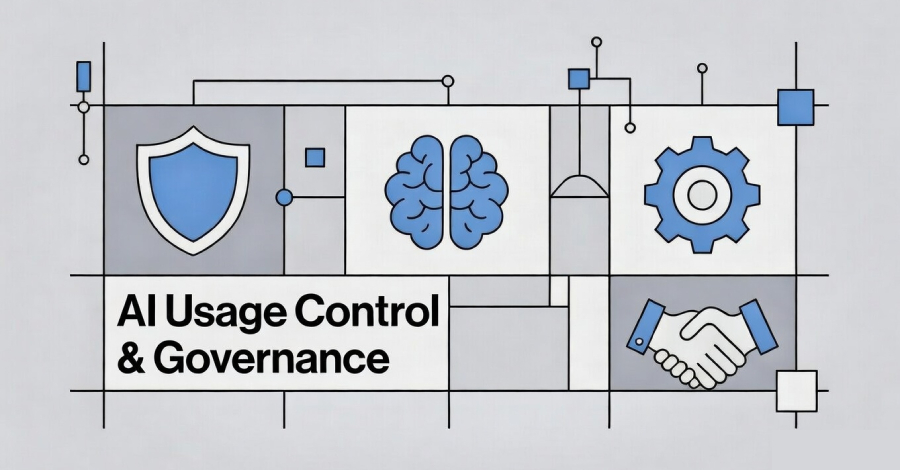
  • New RFP Template for AI Usage Control and AI Governance 

    New RFP Template for AI Usage Control and AI Governance 

    The Hacker NewsMar 04, 2026Artificial Intelligence / SaaS Security

    As AI becomes the central engine for enterprise productivity, security leaders are finally getting the green light — and the budget — to secure it. But there’s a quiet crisis unfolding in the boardroom: many organizations know they need “AI Governance,” but they have no idea what they are actually looking for.

    The CISO’s Dilemma: You Have the AI Budget, but Do You Have the Requirements?

    As AI becomes the central engine for enterprise productivity, security leaders are finally getting the green light—and the budget—to secure it. But there’s a quiet crisis unfolding in the boardroom: many organizations know they need “AI Governance,” but they have no idea what they are actually looking for.

    Without a structured way to evaluate the exploding market of AI Usage Control (AUC) solutions, teams risk “investing” in legacy tools that were never built for the age of agentic workflows and shadow browser extensions.

    A new RFP Guide for Evaluating AI Usage Control and AI Governance Solutions has been released to solve this exact problem. It’s not just a checklist; it’s a technical framework designed to help security architects and CISOs move from vague “AI security” goals to specific, measurable project criteria.

    Stop Fighting App Proliferation; Start Governing Interactions

    The conventional wisdom says that to secure AI, you need to catalog every application your employees touch. This is a losing battle. The RFP Guide argues for a counterintuitive shift: AI security isn’t an “app” problem; it’s an interaction problem.

    If you focus on the app, you’re always playing catch-up with the 500+ new GPT-based tools launched every week. If you focus on the interaction (i.e., the moment a prompt is typed or a file is uploaded) you gain control that is tool-agnostic.

    The benefit for you: By using this RFP to demand “interaction-level inspection,” you stop being a bottleneck for innovation and start being a guardian of data, regardless of which “Shadow AI” tool your marketing team just discovered.

    Why Your Current Security Stack is Failing the AI Test

    Many vendors claim they “do AI security” as a checkbox feature within their CASB or SSE. The RFP Guide helps you see through this marketing. Most legacy tools rely on network-layer visibility, which is blind to what happens inside a browser-side panel or an encrypted IDE plugin.

    The Guide forces vendors to answer the hard questions:

    • Can you detect AI usage in Incognito mode?
    • Do you support “AI-native” browsers like Atlas, Dia, or Comet?
    • Can you distinguish between a corporate identity and a personal one in the same session?

    The benefit for you: This structured approach prevents “feature-wash” by forcing vendors to prove they can operate at the point of interaction without requiring heavy endpoint agents or disruptive network changes.

    The 8 Pillars of a Mature AI Governance Project

    The RFP Template provides a technical grading system across eight critical domains to ensure your chosen solution is future-proof:

    Section What You’re Actually Testing
    1. AI Discovery & Coverage Visibility across browsers, SaaS, extensions, and IDEs.
    2. Contextual Awareness Does the tool understand who is asking and why?
    3. Policy Governance Can you block PII but allow benign summaries?
    4. Real-Time Enforcement Stopping a leak before the “Enter” key is hit.
    5. Auditability Providing “compliance-ready” reports for the board.
    6. Architecture Fit Can it be deployed in hours without breaking the network?
    7. Deployment & Management Ensuring the tool isn’t a burden on your IT staff.
    8. Vendor Futureproofing Readiness for autonomous, agent-driven workflows.

    Governance Isn’t a Policy Document. It’s Enforceable, Measurable Controls.

    The goal of this RFP isn’t just to gather data; it’s to grade it. The Guide includes a response format that requires vendors to provide more than just a “Yes/No.” Rather, they must describe the how and provide references.

    This level of structure takes the guesswork out of procurement. Instead of a subjective “feeling” about a vendor, you get a score-based comparison of how they handle real-world risks like prompt injections and unmanaged BYOD environments.

    Your Next Step: Define Your Requirements Before the Market Defines Them for You

    Use the RFP Guide for Evaluating AI Usage Control Solutions to take the lead. It will help you standardize your evaluation, accelerate your research, and ultimately enable safe AI adoption that scales with the business.

    Download the RFP Guide and Template Here to start building your AI governance framework today.

    Found this article interesting? This article is a contributed piece from one of our valued partners. Follow us on Google News, Twitter and LinkedIn to read more exclusive content we post.


    Source: thehackernews.com…

  • Coruna iOS Exploit Kit Uses 23 Exploits Across Five Chains Targeting iOS 13–17.2.1

    Coruna iOS Exploit Kit Uses 23 Exploits Across Five Chains Targeting iOS 13–17.2.1

    Google said it identified a “new and powerful” exploit kit dubbed Coruna (aka CryptoWaters) targeting Apple iPhone models running iOS versions between 13.0 and 17.2.1.

    The exploit kit featured five full iOS exploit chains and a total of 23 exploits, Google Threat Intelligence Group (GTIG) said. It’s not effective against the latest version of iOS. The findings were first reported by WIRED.

    “The core technical value of this exploit kit lies in its comprehensive collection of iOS exploits, with the most advanced ones using non-public exploitation techniques and mitigation bypasses,” according to GTIG. “The framework surrounding the exploit kit is extremely well engineered; the exploit pieces are all connected naturally and combined together using common utility and exploitation frameworks.”

    The kit is said to have circulated among multiple threat actors since February 2025, moving from a commercial surveillance operation to a government-backed attacker, and finally, to a financially motivated threat actor operating from China by December.

    It’s currently not known how the exploit kit changed hands, but the findings point to an active market for second-hand zero-day exploits, allowing other threat actors to reuse them for their own objectives. In a related report, iVerify said the exploit kit has similarities to previous frameworks developed by threat actors affiliated with the U.S. government.

    “Coruna is one of the most significant examples we’ve observed of sophisticated spyware-grade capabilities proliferating from commercial surveillance vendors into the hands of nation-state actors and ultimately mass-scale criminal operations,” iVerify said.

    The mobile security vendor said the use of the sophisticated exploit framework marks the first observed mass exploitation against iOS devices, indicating that spyware attacks are shifting from being highly targeted to broad deployment.

    Google said it first captured parts of an iOS exploit chain used by a customer of an unnamed surveillance company early last year, with the exploits integrated into a never-before-seen JavaScript framework. The framework is designed to fingerprint the device to determine if it’s real and gather details, including the specific iPhone model and iOS software version it is running.

    The framework then loads the appropriate WebKit remote code execution (RCE) exploit based on the fingerprint data, followed by executing a pointer authentication code (PAC) bypass. The exploit in question relates to CVE-2024-23222, a type confusion bug in WebKit that was patched by Apple in January 2024 with iOS 17.3 and iPadOS 17.3 and iOS 16.7.5 and iPadOS 16.7.5.

    Fast forward to July 2025, the same JavaScript framework was detected on the domain “cdn.uacounter[.]com,” which was loaded as a hidden iFrame on compromised Ukrainian websites. This included websites catering to industrial equipment, retail tools, local services, and e-commerce. A suspected Russian espionage group named UNC6353 is assessed to be behind the campaign.

    What’s interesting about the activity was that the framework was delivered only to certain iPhone users from a specific geolocation. The exploits deployed as part of the framework consisted of CVE-2024-23222, CVE-2022-48503, and CVE-2023-43000, the last of which is a use-after-free flaw in WebKit.

    It’s worth noting that CVE-2023-43000 was addressed by Apple in iOS 16.6 and iPadOS 16.6, released in July 2023. However, the security release notes were updated to include an entry for the vulnerability only on November 11, 2025.

    The third time the JavaScript framework was detected in the wild was in December 2025. A cluster of fake Chinese websites, most of them related to finance, were found to drop the iOS exploit kit after instructing users to visit them from an iPhone or iPad for a better user experience. The activity is attributed to a threat cluster tracked as UNC6691.

    Once these websites are accessed via an iOS device, a hidden iFrame is injected to deliver the Coruna exploit kit containing CVE-2024-23222. The exploit delivery, in this case, was not constrained by any geolocation criteria.

    Further analysis of the threat actor’s infrastructure led to the discovery of a debug version of the exploit kit, along with various samples covering five full iOS exploit chains. A total of 23 exploits spanning versions from iOS 13 to iOS 17.2.1 have been identified.

    Some of the CVEs exploited by the kit and the corresponding iOS versions they targeted are listed below –

    “Photon and Gallium are exploiting vulnerabilities that were also used as zero-days as part of Operation Triangulation,” Google said. “The Coruna exploit kit also embeds reusable modules to ease the exploitation of the aforementioned vulnerabilities.”

    In June 2023, the Russian government claimed the campaign was the work of the U.S. National Security Agency, accusing it of hacking “several thousand” Apple devices belonging to domestic subscribers and foreign diplomats as part of a “reconnaissance operation.”

    UNC6691 has been observed weaponizing the exploit to deliver a stager binary codenamed PlasmaLoader (aka PLASMAGRID) that’s designed to decode QR codes from images and run additional modules retrieved from an external server, allowing it to exfiltrate cryptocurrency wallets or sensitive information from various apps like Base, Bitget Wallet, Exodus, and MetaMask, among others.

    “The implant contains a list of hard-coded C2s but has a fallback mechanism in case the servers do not respond,” GTIG added. “The implant embeds a custom domain generation algorithm (DGA) using the string ‘lazarus’ as a seed to generate a list of predictable domains. The domains will have 15 characters and use .xyz as a TLD. The attackers use Google’s public DNS resolver to validate if the domains are active.”

    A notable aspect of Coruna is that it skips execution on devices in Lockdown Mode, or if the user is in private browsing. To counter the threat, iPhone users are advised to keep their devices up to date, and enable Lockdown Mode for enhanced security.


    Source: thehackernews.com…

  • 149 Hacktivist DDoS Attacks Hit 110 Organizations in 16 Countries After Middle East Conflict

    149 Hacktivist DDoS Attacks Hit 110 Organizations in 16 Countries After Middle East Conflict

    Cybersecurity researchers have warned of a surge in retaliatory hacktivist activity following the U.S.-Israel coordinated military campaign against Iran, codenamed Epic Fury and Roaring Lion.

    “The hacktivist threat in the Middle East is highly lopsided, with two groups, Keymous+ and DieNet, driving nearly 70% of all attack activity between February 28 and March 2,” Radware said in a Tuesday report. The first distributed denial-of-service (DDoS) attack was launched by Hider Nex (aka Tunisian Maskers Cyber Force) on February 28, 2026.

    According to details shared by Orange Cyberdefense, Hider Nex is a shadowy Tunisian hacktivist group that supports pro-Palestinian causes. It leverages a hack-and-leak strategy combining DDoS attacks with data breaches to leak sensitive data and advance its geopolitical agenda. The group emerged in mid-2025.

    In all, a total of 149 hacktivist DDoS claims were recorded targeting 110 distinct organizations across 16 countries. The attacks were carried out by 12 different groups, including Keymous+, DieNet, and NoName057(16), which accounted for 74.6% of all activity.

    Of these attacks, the vast majority, 107, were concentrated in the Middle East, disproportionately targeting public infrastructure and state-level targets. Europe was the target of 22.8% of the total global activity during the time period. Nearly 47.8% of all targeted organizations globally belonged to the government sector, followed by finance (11.9%) and telecommunications (6.7%) sectors.

    “The digital front is expanding alongside the physical one in the region, with hacktivist groups simultaneously targeting more nations in the Middle East than ever before,” Radware said. “The distribution of attacks within the region was heavily concentrated in three specific nations: Kuwait, Israel, and Jordan, with Kuwait accounting for 28%, Israel for 27.1%, and Jordan for 21.5% of the total attack claims.”

    Besides Keymous+, DieNet, and NoName057(16), some of the other groups that have engaged in disruptive operations include Nation of Saviors (NOS), the Conquerors Electronic Army (CEA), Sylhet Gang, 313 Team, Handala Hack, APT Iran, the Cyber Islamic Resistance, Dark Storm Team, the FAD Team, Evil Markhors, and PalachPro, per data from Flashpoint, Palo Alto Networks Unit 42, and Radware.

    The current scope of cyber attacks is listed below –

    • Pro-Russian hacktivist groups like Cardinal and Russian Legion claimed to have breached Israeli military networks, including its Iron Dome missile defense system.
    • An active SMS phishing campaign has been observed using a rogue replica of the Israeli Home Front Command RedAlert application to deliver mobile surveillance and data-exfiltrating malware. “By manipulating victims into sideloading this malicious APK under the guise of an urgent wartime update, the adversaries successfully deploy a fully functional alert interface that masks an invasive surveillance engine designed to prey on a hyper-vigilant population,” CloudSEK said.
    • Iran’s Islamic Revolutionary Guard Corps (IRGC) targeted the energy and digital infrastructure sectors in the Middle East, striking Saudi Aramco and an Amazon Web Services data center in the U.A.E. with an intent to “inflict maximum global economic pain as a counter-pressure to military losses,” Flashpoint said.
    • Cotton Sandstorm (aka Haywire Kitten) revived its old cyber persona, Altoufan Team, claiming to have hacked websites in Bahrain. “This reflects the reactive nature of the actor’s campaigns and a high probability of their further involvement in intrusions across the Middle East amid the conflict,” Check Point said.
    • Data gathered by Nozomi Networks shows that the Iranian state-sponsored hacking group known as UNC1549 (aka GalaxyGato, Nimbus Manticore, or Subtle Snail) was the fourth most active actor in the second half of 2025, focusing its attacks on defense, aerospace, telecommunications, and regional government entities to advance the nation’s geopolitical priorities.
    • Major Iranian cryptocurrency exchanges have remained operational but announced operational adjustments, either suspending or batching withdrawals, and issuing risk guidance urging users to prepare for possible connectivity disruption.
    • “What we’re seeing in Iran is not clear evidence of mass capital flight, but rather a market managing volatility under constrained connectivity and regulatory intervention,” said Ari Redbord, Global Head of Policy at TRM Labs. “For years, Iran has operated a shadow economy that, in part, has used crypto to evade sanctions, including through sophisticated offshore infrastructure. What we’re seeing now – under the strain of war, connectivity shutdowns, and volatile markets – is a real-time stress test of that infrastructure and the regime’s ability to leverage it.”
    • Sophos said it “observed a surge in hacktivist activity, but not an escalation in risk,” primarily from pro-Iran personas, including Handala Hack team and APT Iran in the form of DDoS attacks, website defacements, and unverified claims of compromises involving Israeli infrastructure.
    • The U.K. National Cyber Security Centre (NCSC) alerted organizations to a heightened risk of Iranian cyber attacks, urging them to strengthen their cybersecurity posture to better respond to DDoS attacks, phishing activity, and ICS Targeting.

    In a post shared on LinkedIn, Cynthia Kaiser, ransomware research center SVP at Halcyon and former Deputy Assistant Director with the Federal Bureau of Investigation’s Cyber Division, said Iran has a track record of using cyber operations to retaliate against “perceived political slights,” adding these activities have increasingly incorporated ransomware. 

    “Tehran has long preferred to turn a blind, or at least indifferent, eye to private cyber operations against targets in the US, Israel, and other allied countries,” Kaiser added. “That’s because having access to cyber criminals gives the government options. As Iran considers its response to US and Israeli military actions, it is likely to activate any of these cyber actors if it believes their operations can deliver a meaningful retaliatory impact.”

    Cybersecurity company SentinelOne has also assessed with high confidence that organizations in Israel, the U.S., and allied nations are likely to face direct or indirect targeting, particularly within government, critical infrastructure, defense, financial services, academic, and media sectors.

    “Iranian threat actors have historically demonstrated a willingness to blend espionage, disruption, and psychological impact operations to advance strategic objectives,” Nozomi Networks said. “In periods of instability, these operations often intensify, targeting critical infrastructure, energy networks, government entities, and private industry far beyond the immediate conflict zone.”

    To counter the risk posed by the kinetic conflict, organizations are advised to activate continuous monitoring to reflect escalated threat activity, update threat intelligence signatures, reduce external attack surface, conduct comprehensive exposure reviews of connected assets, validate proper segmentation between information technology and operational technology networks, and ensure proper isolation of IoT devices.

    “In past conflicts, Tehran’s cyber actors have aligned their activity with broader strategic objectives that increase pressure and visibility at targets, including energy, critical infrastructure, finance, telecommunications, and healthcare,” Adam Meyers, head of Counter Adversary Operations at CrowdStrike, said in a statement shared with The Hacker News.

    “Iranian adversaries have continued to evolve their tradecraft, expanding beyond traditional intrusions into cloud and identity-focused operations, which positions them to act rapidly across hybrid enterprise environments with increased scale and impact.”



    Source: thehackernews.com…

  • Speakeasies to Shadow AI: Banning AI Browsers Will Fail

    Speakeasies to Shadow AI: Banning AI Browsers Will Fail

    COMMENTARY

    Gartner recently recommended that enterprises ban AI browsers. It’s an understandable impulse for cybersecurity practitioners. These tools have built-in AI sidebars that can leak sensitive data, backend connections to unknown third-party services, and prompt injection vulnerabilities that manipulate browser behavior. CISOs are rightfully wary.

    However, employees are enamored of AI browsers. It’s understandable; AI browsers can help corporate workers book airline tickets, make hotel reservations, or compare items on Amazon.

    Banning something people want to use won’t make it go away. Just like with the Prohibition laws in the United States in the 1920s, it will just push usage underground.

    The browser has become the fundamental corporate user interface, with more than 85% of the workday now taking place in a browser, accessing software-as-a-service and web applications. Employees aren’t asking IT for permission to enhance their productivity with AI tools. LayerX research shows that 20% of enterprise users already have a GenAI browser extension installed.  They’re simply installing them and getting to work.

    Related:More Than Dashboards: AI Decisions Must Be Provable

    And, they’re popular: Claude in Chrome (released in late 2025) has already reached 800,000 downloads on the Chrome Web Store, while Perplexity’s Comet browser has surpassed 1 million downloads on Google Play.

    Why Digital Prohibition Won’t Work

    The challenge with blocking AI browsers is practical and strategic, and history offers an instructive parallel. When the United States banned alcohol in 1920, consumption didn’t stop; it just became harder to control and far more dangerous. Bootleggers filled the gap left by legitimate breweries. Speakeasies replaced regulated bars. Without oversight, people drank bathtub gin that could blind or kill them. The government lost both visibility into what people were drinking and any ability to regulate quality or safety.

    The same dynamic plays out with AI browser bans. Users working from home, in coffee shops, and on personal devices will continue finding ways to access the tools that make them more productive. Banning AI browsers will not limit the risk they pose, but it will likely impede visibility into real cyber risks as they unfold. 

    Blanket bans overlook the larger transformation in how people work and why they’re drawn to these tools in the first place. AI browsers genuinely help users code faster, write better, and research more efficiently. But the harder CISOs push prohibition, the more creative their users become at circumventing it. Often it’s in ways that create even greater security risks than the original behavior they were trying to prevent.

    Related:Cities Hosting Major Events Need More Focus on Wireless, Drone Defense

    The Last Mile Problem 

    What makes AI browsers particularly challenging is that they operate in the “last mile” of enterprise security: the final interface between users and the Internet. This is precisely where traditional security tools have their biggest blind spots. Think of the digital equivalent of the alley behind the speakeasy where the real business happens. For example, network solutions can’t see or control anything happening inside locally deployed browsers (of any kind), and traditional endpoint DLP can’t differentiate between “good” and “bad” browsing activity.   

    This means when a user pastes proprietary code into an AI sidebar, traditional security controls often can’t see it, let alone stop it. By implementing a ban that is difficult — if not impossible — to fully enforce, organizations aren’t eliminating the risk. Instead, they’re just making it invisible, operating in the shadows where the worst outcomes tend to happen.

    Regulation Over Prohibition

    When the US repealed Prohibition in 1933, it didn’t mean a free-for-all. In fact, it was quite the opposite. It led to the establishment of frameworks for licensing, quality control, and responsible consumption. The result was a system that balanced individual freedom with public safety and, critically, one that actually worked because it acknowledged reality. 

    Related:PCI Council Says Threats to Payments Systems Are Speeding Up

    Rather than prohibition, enterprises need controlled enablement, recognizing that AI browsers are part of the modern workspace. It will also require controls that can actually monitor and manage the risk. This might mean context-aware DLP policies that can detect when sensitive data is being shared with AI services. Or it could involve identity-based access controls that adjust permissions based on user behavior and risk profiles, or browser-layer security that provides visibility into what is actually happening in that last mile.

    Learn from History

    The lesson from every major technology shift — from BYOD to cloud to shadow SaaS — is that users will adopt tools that make them more productive, with or without IT approval. Security teams that acknowledge this reality and work with it are far more effective than those who fight it. 

    Gartner’s recommendation to ban AI browsers isn’t “wrong”; the risks are indeed real. But based on our research and the lessons of history, a blanket ban without effective controls is unenforceable and counterproductive. The better approach is to meet your users where they are, with what they need, and implement controls that reflect how corporate workforces actually behave.

    Prohibition failed because it fought human nature. Let’s not make the same mistake with AI browsers.


    Source: www.darkreading.com…